Mixed Marks for Classroom Resources
Download full report as a PDF file: is released under a Creative Commons Attribution 4.0 International (CC BY 4.0).
Acknowledgements
We'd like to extend our thanks to the William and Flora Hewlett Foundation for their continued support and guidance for this research, which has allowed this project to grow. We also thank the Online Learning Consortium, our grant administrator, for their support of the project.This report would not be possible without all of the K-12 teachers and administrators who completed our survey. We are especially grateful to the respondents who took the time to enter comments and provide their opinions and feedback. We review each and every comment that is submitted. Some of these comments appear as quotations throughout this report, with permission. These quotes are reproduced as faithfully as possible; we have changed the language to remove personally identifiable information, for brevity, or to correct obvious typos.
The project also received great support from the open education community, who offered feedback and advice throughout the course of this project. We thank our reviewers for their feedback, which helped focus and finalize our survey and report.
This report would not have been possible without support from our colleagues. We thank Nate Ralph for his extensive copy editing, I. Elaine Allen for feedback throughout the process, and Mark Favazza for designing the report cover.
Finally, we want to thank everyone who reads this report. Please reach out with any and all comments, questions, and feedback.
Julia E. Seaman
Jeff Seaman
Bay View Analytics
2025
Executive Summary
This is the sixth report in a series tracking curricula discovery, selection, and adoption processes in U.S. K-12 education. The surveys have tracked the growth of digital materials and open educational resources (OER) in K-12 classrooms since 2017, providing trends on adoption and sentiments.This survey was conducted in April 2025, with a total of 1,137 teachers participating. The respondents come from 50 states and the District of Columbia.
The key takeaways from this year’s survey are:
- While instruction remains overwhelmingly in-person, print and digital classroom< materials are both integrated into classrooms
- Teacher satisfaction with classroom materials remains mixed; the majority of< materials are given good to passable grades, with no difference based on the format that is used, but there is room for improvement
- OER awareness continues to grow, albeit slowly, matched by a small increase in OER adoption in the classroom
- Grade level matters: teachers in higher grades are more likely to offer digital textbooks, though they are also more likely to use print materials, and much more likely to be aware of OER
STUDY RESULTS
In-Person and Remote Teaching
In person instruction dominates, reflecting a sustained post pandemic return to traditional classroom attendance.
“Obviously online learning is the future, but it is very difficult to find programs that have both rigor and relevance.”
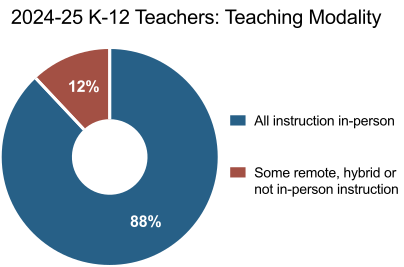
Eighty-eight percent of respondents taught their classes entirely in person, while just 12% taught any of their classes remotely or as a hybrid of remote and in-person instruction.
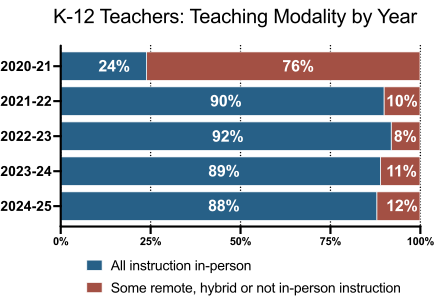
After an unprecedented shift to remote instruction (76%) in the 2020-21 academic year — a result of the global COVID-19 pandemic — teachers rapidly returned to in-person instruction. By 2024–25, in-person instruction dominates at 88%, with hybrid/remote models dropping to 12%. This balance has remained relatively constant since 2021-22.
Textbook Formats
Print and digital formats coexist in the in person classrooms with little change post - - pandemic; there is slightly higher digital only availability in higher grade levels.
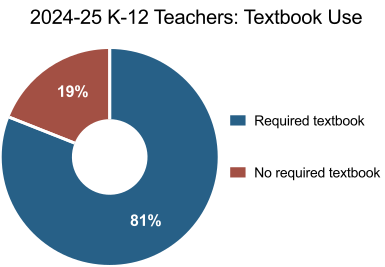
The majority of K-12 teachers, at 81%, require a textbook, while 19% of respondents do not require a textbook for their primary instructional course.
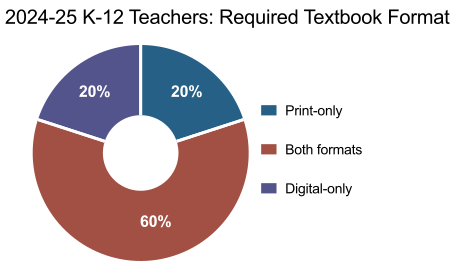
Of those K-12 teachers who require a textbook, 20% exclusively provide print textbooks for their students, and 20% exclusively provide digital textbooks. Sixty percent of teachers report their students are provided a mix of both formats. It is important to note that the teacher may not choose the specific textbook format; the choice may come from school, district, or state-level guidelines, and/or based on publisher availability. Further, the measurement is for what is provided to the students, not necessarily what format is used (if at all) by the students themselves.
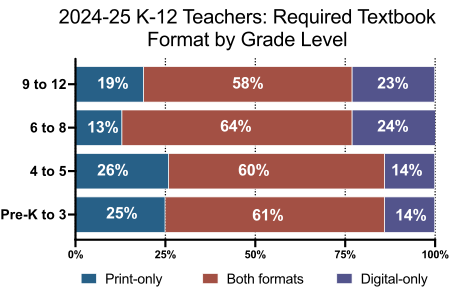
Formats for the required textbooks vary by grade level. For Pre-K to 5th grade, print-only required textbooks are much more common at a quarter of teachers, while digital-only formats are rarer (14%). In contrast, digital-only required textbooks rose to 23% for middle and high school level students, with both formats (print and digital) remaining consistently popular across all grade levels (around 60%).
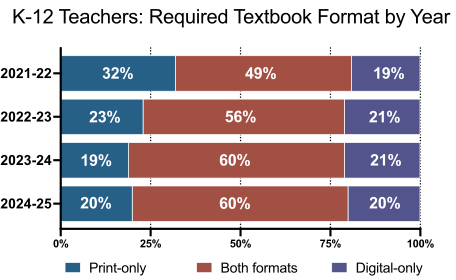
The collected responses on the format of required textbooks show We saw a gradual decline in print-only required textbooks in favor of the use of both print and digital formats, with little change to digital-only formats. From 2021-22 to 2024-25, print-only usage dropped from 32% to 20%, while the use of both formats increased from 49% to 60%. This trend highlights a slow but consistent shift toward the availability of digital resources, likely driven by technological advancements and institutional support for digital learning. However, the minimal growth in digital-only usage compared to the sharper decline in print-only suggests that print materials are still widely used, possibly due to accessibility, cost, or institutional inertia.
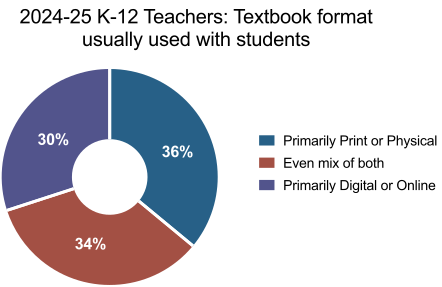
The availability of both formats of a textbook does not mean that the teacher or students will use both formats. The survey also asked teachers to specify what textbook format they usually use with students. Interestingly, though not unexpectedly, the proportions for the formats are a little different when responding for use.
Thirty percent of K-12 teachers primarily use a digital textbook or online tools with their students, while 36% of respondents primarily use print textbooks or other physical materials. Thirty-four percent of respondents reported using an even mix of both physical and digital materials. When compared to the responses for the provided formats, there is a higher percentage of print-only and digital-only usage. This shows that almost half of the teachers whose textbook is provided in both formats to students primarily use just one of the formats, divided evenly.
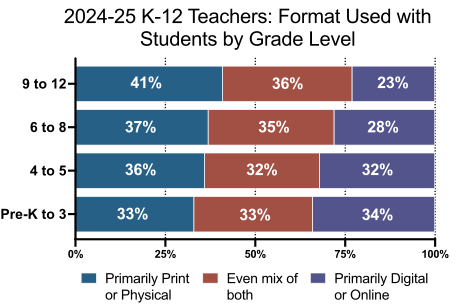
The trends for use by grade level differs a bit more. For younger grades (Pre-K to 3), the preference for digital formats is relatively balanced, with 34% of respondents selecting "Primarily Digital or Online." Higher grades (9-12) show a significantly lower preference for digital, at only 23% of teachers. This trend suggests a decreasing reliance on digital formats as students progress through higher grades. Conversely, the preference for print-based formats increases with grade level, peaking at 41% for 9-12 students, compared to 33% for students in Pre-K to 3. The "Even mix of both" category remains relatively stable across grades, hovering between 32% and 36%, suggesting that while a majority of teachers favor one format over the other, a consistent minority prefers a balanced approach.
Course Material Rating
Course material satisfaction remains mixed as teachers rate curricula as generally effective (73% average), but flexibility and student engagement are areas for improvement, with 21% finding materials unengaging.
We asked teachers to assess their satisfaction with their classroom course materials across several metrics, on a scale of 0-100, and to provide an overall rating for their curricula.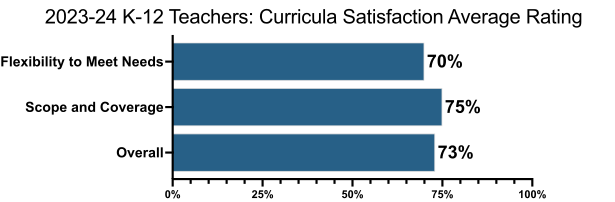
The average "Overall" rating for curricula was 73%, suggesting that K-12 teachers are generally satisfied with their curricula. The respondents gave an average score of 70% for their curricula's "Flexibility to meet their needs", and a slightly higher rating of 75% for their curricula's "Scope and Coverage."
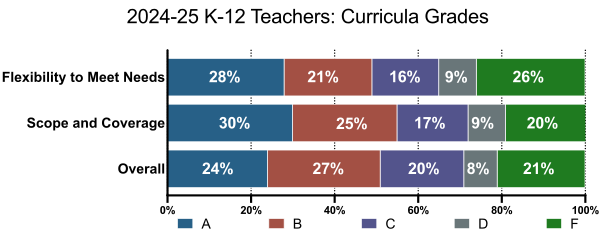
Examining the specific grades assigned to each aspect provides more details. Instructional materials are generally perceived as high quality, with strong ratings for "Scope and Coverage" (30% giving an A) and "Flexibility to Meet Needs" (28% giving an A), the highest grade category for both. However, overall satisfaction is slightly lower, with the largest category of 27% of respondents assigning a B rating for the "Overall" category. The "Flexibility to Meet Needs" category also has a notable number of D and F ratings (9% and 26%), indicating some concerns about adaptability. These findings suggest that while materials effectively cover content and can adapt to diverse needs, there is room for improvement in overall quality and usability, especially in addressing gaps in flexibility.
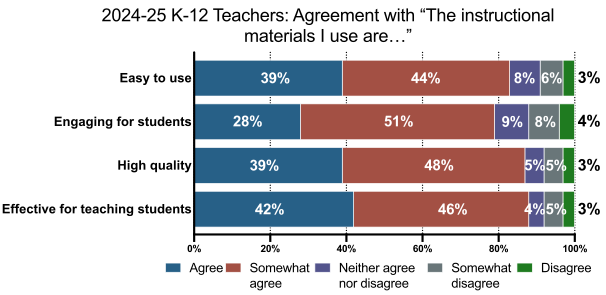
Opinions on instructional materials are generally positive, with strong agreement on their effectiveness for teaching (42% agree, 46% somewhat agree) and quality (39% agree, 48% somewhat agree). However, engagement for students is lower, with only 28% agreeing and 51% somewhat agreeing that materials are engaging. Ease of use is moderately positive, with 39% agreeing and 44% somewhat agreeing. The low percentage of disagreement responses (3–8%) suggests that most respondents have a favorable view, but the lack of enthusiasm for engagement indicates a potential area for improvement. The data also reveal a slight preference for agreement over neutrality, with "Neither agree nor disagree" responses remaining minimal (4–9%), indicating a clear stance on most aspects.
There are no major differences in the curricula satisfaction ratings or opinions based on the format of the required textbook. Teachers who use print-only report the same pattern of satisfaction as those who use digital-only or both formats.
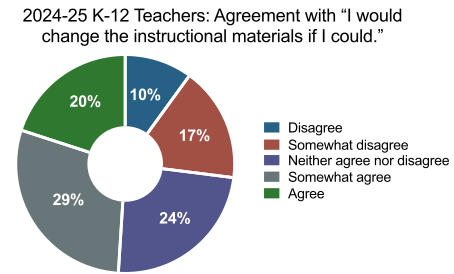
Twenty percent of respondents agreed with the statement "I would change the instructional materials if I could," and a near majority of respondents agreed (20%) or somewhat agreed (29%) with the statement. Just 10% of respondents disagreed with the statement, while 17% somewhat disagreed. That said, 24% of respondents remain on the fence, neither agreeing nor disagreeing with the statement. Interestingly, the large proportion of teachers agreeing with the statement is in contrast to their positive sentiment on the materials themselves.
Perceptions of Digital versus Print
Digital flexibility is valued, though many agree print is for optimal learning.
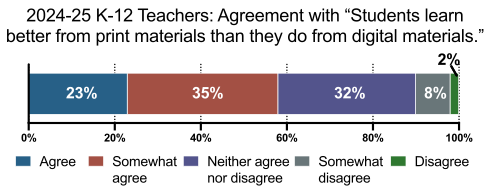
K-12 teachers generally agree that students learn best with print materials: 23% of respondents agreed outright, and 35% somewhat agreed. Only 10% showed some disagreement, indicating a pro-digital perspective. However, a large group (32%) neither agreed nor disagreed.
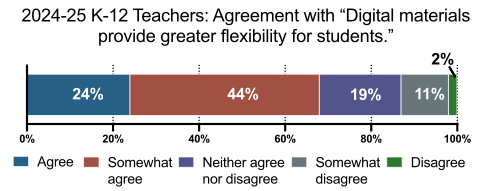
Conversely, the majority of teachers agree that digital materials offer greater flexibility for their students: 24% agreed with the statement, and 44% somewhat agreed with the pro-digital viewpoint. Thirteen percent of respondents shared some level of disagreement, while 19% of respondents neither agreed nor disagreed.
Combined, it is clear that K-12 teachers are aware of the benefits of both print and digital materials in their classrooms. These data also support the previously shown results that offering both formats for the textbook is common in K-12.
OER and Licensing Awareness
OER awareness increases with grade level and at highest recorded level, though remains low overall.
"I do not have the TIME I need to prepare and implement new educational practices. I need time and money and I have neither."
"Open educational resources (OER) are typically available in digital format, either free of charge or at a very low cost. Unlike commercially published materials, OER materials are available under open licenses, most commonly a Creative Commons license, that let users revise and share them. Many OER materials are created and shared by educators and peers, though there are also OER publishers."
To gauge awareness of OER, reports in this series have used a consistent question, which has proven to have the best balance in differentiating among the varying levels of awareness, without leading those with no previous knowledge of the concept. The specific wording has remained consistent to support year-to-year comparisons to the earlier surveys. Furthermore, the measure of OER awareness incorporates both responses to Creative Commons licensing and OER awareness questions to ensure a high-quality output.
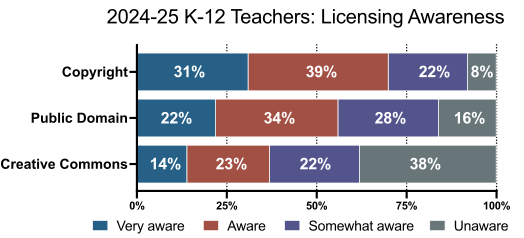
Educator awareness varies depending on the type of licensing. Teachers are most aware of copyright, at 92% at any level of awareness. This is followed by awareness of public domain at 84%. Awareness of Creative Commons licensing is the lowest among the three, at 59%.
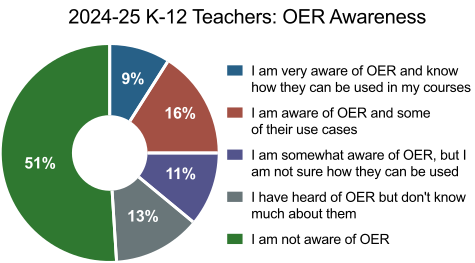
For the 2024-25 academic year, just over half of K-12 teachers surveyed (51%) report that they are not aware of OER. Only 9% of respondents state they are very aware of OER and know how to use them, and an additional 16% say they are aware and know some of their use cases. Eleven percent of respondents are somewhat aware of OER, conceptually, but don't know how they can be used. Finally, 13% of respondents have heard of OER but don't know much else about them.
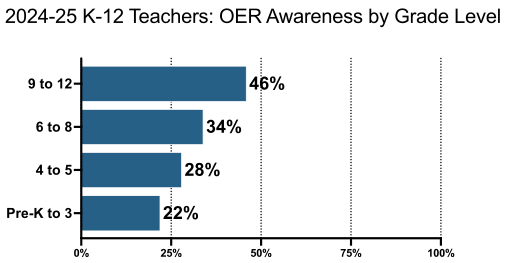
OER awareness is correlated with grade level. Teachers at the Pre-K to 3 level were the least likely to be aware of OER, at 22%. That number rises to 28% at grades 4 to 5, 34% at grades 6 to 8, and more than doubles to 46% of respondents at grades 9 to 12.
This suggests that there may be multiple factors impacting OER awareness, such as the likelihood to use textbooks (less common in lower grades) and the availability of OER materials (more common in higher grades).
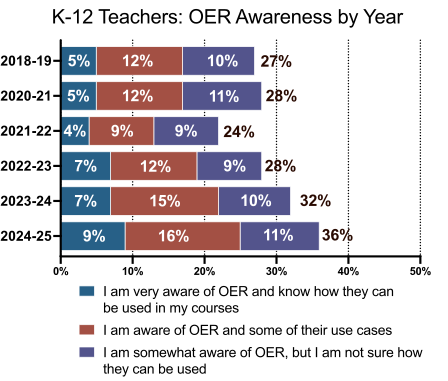
For the second year in a row, overall OER awareness is at the highest level we’ve measured. It has been increasing year over year since 2021-22, after a small dip following the global COVID- 19 pandemic. The overall level of awareness is 12% higher than its lowest point of 24%, representing 50% growth, and 9% higher than the oldest measurement, representing 33% growth.
From 2018-19 to 2024-25, the percentage of respondents who are "very aware" of OER and their use cases has fluctuated slightly, but reached its highest recorded level, 9%, in the 2024-25 academic year. The "aware" and "somewhat aware" categories have remained consistent in recent years.
OER Use
One third of teachers use OER materials across their classrooms, and OER use as required materials grew marginally in 2024 25.
"OER has been a god send for both my Honors and AP World History classes, their videos are short and come directly from historians. This adds a level of credibility that internet people don't have. Also they are constantly updating the sources."
"I feel like they are a great extra resource but I personally need a standard curriculum as my main guide. Having OER as supplemental materials helps enhance lessons and activities."
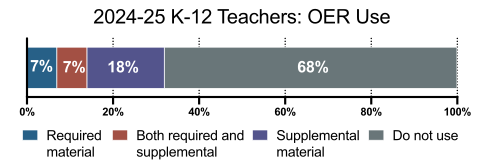
Like any classroom material, OER can be used as required or supplementary materials. A total of 14% of teachers use OER as required materials in their classrooms, and 25% of respondents use OER as a supplemental material. This includes the 7% who use OER materials as both required and supplemental materials. The majority of the K-12 teachers surveyed (68%) do not use OER in any of their classes.
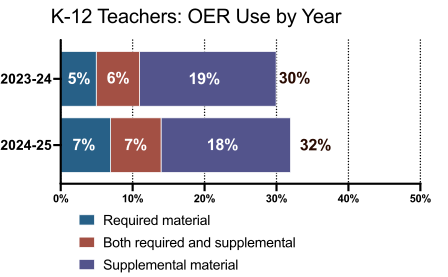
There has been some growth, albeit marginally, in the use of OER by K-12 teachers in the 2024-25 academic year, compared to 2023-24. Seven percent of teachers now report using OER as required materials, up from 5% the previous year. Seven percent of respondents are using OER as both supplemental and required materials, up from 6% last year. Eighteen percent of teachers are using OER to supplement their existing curricula; this is down from 19% the year before.
Respondents had quite a bit to say about OER. Throughout their open-ended comments, several key themes were raised again and again. Foremost was the idea of quality: users with negative experiences or perspectives on OER expressed frustration with the quality of materials they found, or didn't find, for their subject matter. Positive opinions, by contrast, highlighted OER's flexibility and adaptability. Even when concerns about quality were raised, these respondents felt that the ability to remix and customize the content they found superseded those occasional drawbacks.
SUMMARY
There is no typical classroom when it comes to material formats and the adoption of digital tools, even if the content may be similar. The results of our survey highlight the interplay between traditional and digital resources, course material effectiveness, and the gradual adoption of open educational resources (OER). In-person instruction remains dominant, reflecting a post-pandemic return to physical classrooms, with hybrid or remote models declining. Teachers increasingly integrate both print and digital materials, though preferences vary by grade level, with teachers with younger students favoring print, and those with older students showing greater reliance on digital formats.Course material satisfaction is generally positive, with educators rating materials as effective for content delivery. That said, about half of teachers would change their materials if they could. Concerns persist regarding adaptability and student engagement, suggesting a need for more flexible resources that cater to diverse learning needs. While digital tools are widely used, their impact on engagement remains limited, and there is growing interest in emerging technologies like AI as potential catalysts for transformation.
A little more than a third of all K-12 teachers are aware of OER and its benefits, with awareness slightly higher among high school (grades 9-12) teachers. Though this means many educators remain unaware of its benefits or limitations. OER use has grown marginally, but institutional and systemic barriers continue to hinder broader adoption. This underscores the need for targeted efforts to expand awareness, particularly in lower grades, and to address challenges related to accessibility and support of OER.
As schools navigate the complexities of balancing traditional and digital resources, the survey results highlight the importance of fostering adaptability in curricula and leveraging open resources to enhance equity and engagement. The evolving landscape reflects a dynamic interplay between legacy systems and emerging technologies, shaping the future of K-12 education.
Next Steps
We plan to continue to track digital adoption and perceptions in K-12. Some specific research topics we will follow are monitoring of digital adoption in place of or alongside print, OER awareness expansion into lower grades, and exploration of developing tools to reshape educational practices such as artificial intelligence. What will be the transformative digital resources that can have a paradigm-shift on how students learn and interact with the materials?All future publications will be available on our website: bayviewanalytics.com/OER.
METHODOLOGY
This survey was conducted in April 2025, with a total of 1,137 teachers. The respondents come from 50 states and the District of Columbia.The survey is designed to be representative of all public-school districts in the United States that operate schools. Information on these districts comes from the Common Core of Data (CCD) from the U.S. Department of Education's National Center for Education Statistics (http://nces.ed.gov/ccd/ccddata.asp).
Teachers and administrators were invited to participate in the survey through an email invitation. The selected groups were chosen randomly from a commercial source of email addresses. During the survey response period, participants may have also received a reminder email asking them to participate in the research. Both the invitation and the reminder message contained a unique URL that, when clicked, would load the survey form in a web browser and pass the unique survey ID.
The invitation email, reminder email, and survey itself described the research project as well as the funding source for the study (The William and Flora Hewlett Foundation), and who was conducting it (“researchers at Bay View Analytics”). They were also told: “All survey respondents are provided complete anonymity; the William and Flora Hewlett Foundation does not see individual-level results. No personally identifiable information is released.”
The questionnaires used in this study builds on those used in previous Bay View Analytics studies on K-12 educators and about the curriculum adoption processes. There were new questions added for this year’s survey, as well as repeated questions from earlier reports in this project and others.
OER awareness was measured using the same approach as previous reports in this series, with questions about awareness of licensing mechanisms along with a general question on OER awareness.
DEFINITIONS
In addition to examining the curriculum adoption process, this study explores materials classified as open educational resources (OER). Creative Commons defines OER as:Open Educational Resources (OER) are teaching, learning, and research materials that are either (a) in the public domain or (b) licensed in a manner that provides everyone with free and perpetual permission to engage in the 5R activities.(1)
- Retain – make, own, and control a copy of the resource
- Reuse – use your original, revised, or remixed copy of the resource publicly
- Revise – edit, adapt, and modify your copy of the resource
- Remix – combine your original or revised copy of the resource with other existing material to create something new
- Redistribute – share copies of your original, revised, or remixed copy of the resource with others
A form of protection provided by the laws of the United States for "original works of authorship", including literary, dramatic, musical, architectural, cartographic, choreographic, pantomimic, pictorial, graphic, sculptural, and audiovisual creations. "Copyright" literally means the right to copy but has come to mean that body of exclusive rights granted by law to copyright owners for protection of their work. … Copyright covers both published and unpublished works.(2)
Of particular interest for this study is the copyright status of the primary textual material (including textbooks) that teachers select as core materials for their courses.
Copyright owners have the right to control the reproduction of their work, including the right to receive payment for that reproduction. An author may grant or sell those rights to others, including publishers or recording companies.(3)
1 https://creativecommons.org/about/program-areas/education-oer/ 2 http://www.copyright.gov/help/faq/definitions.html 3 http://legal-dictionary.thefreedictionary.com/copyright
Not all materials are copyrighted. Some content may be ineligible for copyright, copyrights may have expired, or authors may have dedicated their content to the public domain (e.g., using Creative Commons public domain dedication4).
The public domain (PD) consists of all the creative work to which no exclusive intellectual property rights apply. Those rights may have expired, been forfeited, expressly waived, or may be inapplicable. Because no one holds the exclusive rights, anyone can legally use or reference those works without permission.(5)
An intermediate stage between traditional copyright, with all rights reserved, and public domain, where no rights are reserved, is provided by Creative Commons licenses. A Creative Commons license is not an alternative to copyright, but rather a modification of the traditional copyright license that grants some rights to the public.
The Creative Commons (CC) open licenses give everyone from individual authors to governments and institutions a simple, standardized way to grant copyright permissions to their creative work. CC licenses allow creators to retain copyright while allowing others to copy, distribute, and make some uses of their work per the terms of the license. CC licenses ensure authors get credit (attribution) for their work, work globally, and last as long as applicable copyright lasts. CC licenses do not affect freedoms (e.g., fair use rights) that the law grants to users of creative works otherwise protected by copyright.(6)
The most common way to openly license copyrighted education materials — making them OER — is to add a Creative Commons license to the educational resource. CC licenses are standardized, free-to-use, open copyright licenses.7
This study also examines an emerging, subscription-based distribution model typically called "inclusive access," though often going by various names with no single clear definition. The common elements across all the variants of subscription-based models are digital distribution, multiple textbooks and/or classrooms included under one contract, and students included unless they opt-out.
[1] https://creativecommons.org/about/program-areas/education-oer/.
[2] http://www.copyright.gov/help/faq/definitions.html.
[3] http://legal-dictionary.thefreedictionary.com/copyright.
[4] https://creativecommons.org/publicdomain/zero/1.0/.
[5] https://en.wikipedia.org/wiki/Public_domains.
[6] Personal communication from Cable Green, PhD, Director of Open Education, Creative Commons.
[7] State of the Commons.
Recent Publications
Course Material Affordability
- 2025 Virginia Course Materials Survey: Executive Summary (pdf)
- 2025 Virginia Course Materials Survey: Results & Findings (pdf)
- 2023 National Course Materials Survey (pdf)
- Pennsylvania Course Materials Survey 2023 (pdf)
Open Educational Resources
- Deeply Digital: Educational Resources in U.S. Higher Education, 2025 (pdf)
- Mixed Marks for Classroom Resources Educational Resources in U.S. K-12 Education, 2025 (pdf)
- Research Brief: Digital and OER Textbook Adoption
- Research Brief: Faculty Satisfaction with Course Materials varies by Publisher
Digital Learning Pulse Surveys
- Infographic: 2023-2024 Digital Learning Pulse Survey (pdf)
- The Digital Transformation of the Community College (pdf)
- Planning for a Smaller Future: Dealing with Declining Enrollments (pdf)
STEM
- Teaching Online: STEM Education in the Time of COVID (pdf)
- What Makes a STEM Student
- Perceptions of the Future of STEM Education
Distance Education
- Digital Faculty: Faculty Social Media Use and Communications (pdf)
- Infographic: Digital Faculty (pdf)
- Grade Increase: Tracking Distance Education in the United States (pdf)
Follow us on
 Twitter and
  LinkedIn.
Privacy
All survey respondents are provided complete anonymity. No personally identifiable information is released. Full privacy policy.